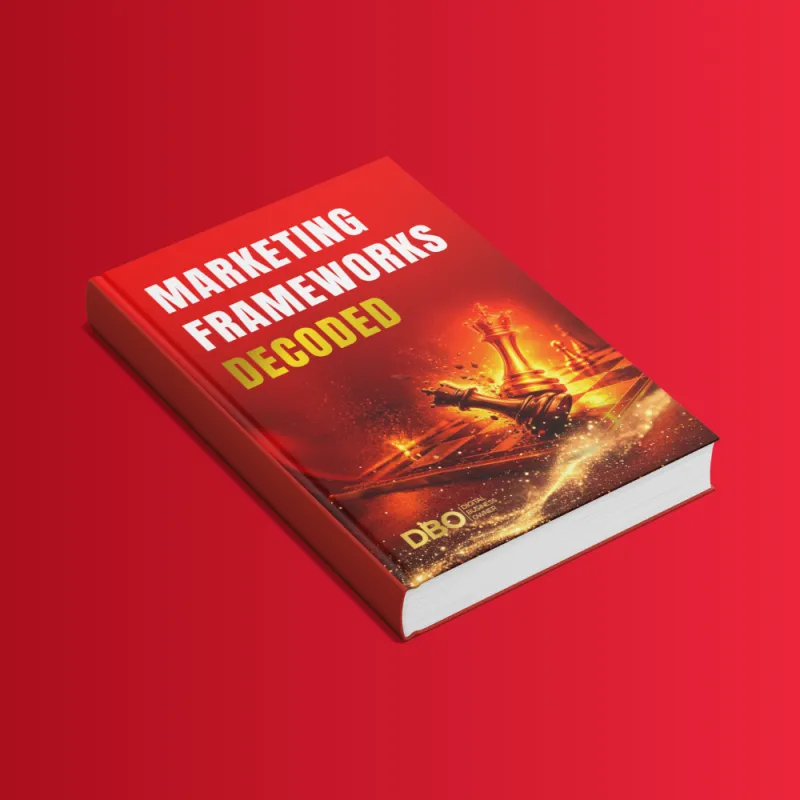


Marketing Frameworks Decoded
$49.00
$99.0051% offQuantity

All Products Special
$149 $297
You get all 80 eBooks, Checklists and Tools!
Risk-free Purchase: Full refund within 07 days
Safe and Secure Checkout

















































About Marketing Frameworks Decoded
With over 28+ marketing frameworks, this e-book is your comprehensive guide to mastering the art and science of marketing.
From fundamental concepts such as supply and demand, market research, and segmentation, to intricate frameworks like STP marketing models, Ansoff Matrix, and the Blue Ocean Strategy, this e-book covers it all.
Dive into real-world scenarios – with 50+ illustrations for clear, easy understanding.
It isn’t just about the theory; we’ve made sure to include content that guides you through implementing these frameworks, be it creating customer personas, devising a selling point, or adapting and evaluating your marketing strategies.
Table of contents
1. Introduction to marketing strategies
1.1. Definition of marketing
1.2. What marketing isn’t?
1.3. What exactly is marketing strategy?
1.4. Importance of marketing strategy
1.5. Why do you need a marketing strategy?
1.6. Impact on organizations and communication
2. Understanding marketing basics
2.1. Supply and demand
2.2. Explaining demand
2.3. Explaining supply
2.4. Finding an equilibrium
2.5. Theory or law?
3. Market research
3.1. Understanding market research
3.2. Primary market research
3.3. Secondary market research
3.4. Types of market research
3.4.1. Face-to-face interviews
3.4.2. Focus groups
3.4.3. Phone research
3.4.4. Survey research
3.4.5. Online market research
3.5. How to do market research
3.6. Benefits of market research
4. Basics for the segmentation of industrial market
4.1. Definition and foundations of industrial market segmentation
4.2. Influence of industrial market segmentation on industrial marketing strategies
5. Basics of product positioning
5.1. Meaning of “product positioning”
5.2. Positioning types
5.2.1. Price
5.2.2. Quality
5.2.3. Differentiation
5.2.4. Convenience
5.2.5. Customer service
5.3. Advantages of product positioning
6. Relationship between the company and the market
6.1. Finding your ideal customers
6.2. Customer persona construction
6.3. Making a selling point
6.4. Formulating ad campaigns
6.5. Promoting recognition and acceptance of your brand
6.6. Evaluating and adapting
7. Marketing mix and the 7p’s of marketing
7.1. 7ps of marketing – understanding the concept
7.2. 1st of 7p’s of marketing – product
7.3. 2nd of 7p’s of marketing – price
7.4. 3rd of 7p’s of marketing – place
7.5. 4th of 7p’s of marketing – promotion
7.6. 5th of 7p’s of marketing – people
7.7. 6th of 7p’s of marketing – process
7.8. 7th of 7p’s of marketing – physical evidence
7.9. Marketing mix process
7.10. Marketing mix physical evidence
8. SWOT Analysis
8.1. Understanding SWOT analysis
8.2. SWOT analysis’s key elements
8.2.1. Strengths
8.2.2. Weaknesses
8.2.3. Opportunities
8.2.4. Threats
8.3. SWOT table
8.4. How to do a SWOT analysis?
9. STP Marketing Model
9.1. What is STP marketing model?
9.2. How does STP model work?
9.3. STP marketing process
9.4. Importance of the STP marketing model
9.5. Examples of STP marketing models
9.5.1. Nike
9.5.2. Mcdonald’s
9.5.3. Iphone
10. Porter’s 5 Forces
10.1. Understanding the Five Forces of Porter
10.1.1. Industry competitiveness
10.1.2. Potential for new competitors in an industry
10.1.3. Supplier influence
10.1.4. Customer power
10.1.5. Threat of substitution
10.2. What Function Do Porter’s Five Forces Serve?
11. ANSOFF MATRIX
11.1. Understanding the Ansoff Matrix
11.1.1. Market penetration
11.1.2. Market development
11.1.3. Product development
11.1.4. Diversification
12. BCG Growth-Share Matrix
12.1. BCG Growth-Share Matrix: An Overview
12.1.1. Pets or dogs
12.1.2. Cash cows
12.1.3. Stars
12.1.4. Question marks
12.1.5. Limitations of the matrix
12.2. A BCG Growth Matrix example
13. AIDA MODEL
13.1. AIDA Model Hierarchy
13.1.1. First step: attention
13.1.2. Second step: interest
13.1.3. Third step: desire
13.1.4. Fourth step: action
13.2. New Developments in the AIDA Model
13.2.1. AIDCAS model
13.2.2. REAN model
13.2.3. NAITDASE model
14. Marketing Funnel
14.1. Advantages of Marketing Funnels
15. Kotler’s 5 A’s of Sales Marketing
15.1. What are Kotler’s 5 A’s?
15.2. Kotler’s 5 A’s of the customer path stages
15.2.1. Aware
15.2.2. Appeal
15.2.3. Ask
15.2.4. Act
15.2.5. Advocate
16. Blue Ocean Strategy
17. PESTLE Analysis
17.1. PESTLE Elements
18. Pirate Metrics, AAARRR Framework
18.1. Awareness
18.2. Acquisition
18.3. Activation
18.4. Revenue
18.5. Retention
18.6. Referral
19. Hook Model
19.1. Hook Model: How Does It Operate?
19.1.1. Trigger
19.1.2. Action
19.1.3. Variable rewards
19.1.4. Investment
20. STEPPS Framework
20.1. Social Currency
20.2. Triggers and Emotions
20.3. Public and Practical Value
20.4. Stories
21. Honeycomb Model
21.1. Seven Social Media Honeycomb Components
21.2. Implementing the Honeycomb Method in SMM
22. Bullseye Marketing Framework
22.1. Step 1: Consider Your Target Audience
22.2. Step 2: Review the traction channels in the Bullseye Framework
22.3. Step 3: Monitor Your Customer Acquisition Cost
22.4. When should you use the Bullseye Framework?
23. RACE Model
23.1. What does RACE stand for?
23.1.1. Reach
23.1.2. Act
23.1.3. Convert
23.1.4. Engage
23.2. Should you choose the RACE model?
24. Lean Canvas Model
24.1. Exploring the 9 Key Components of the Lean Canvas
24.1.1. Problem
24.1.2. Customer segments
24.1.3. Unique value proposition
24.1.4. Solution
24.1.5. Channels
24.1.6. Revenue streams
24.1.7. Cost structure
24.1.8. Key metrics
24.1.9. Unfair advantage
24.2. How to fill Lean Canvas?
25. Pragmatic Marketing Framework
26. Jobs-to-be-Done: A Framework for Customer Needs
26.1. Who are your customers?
26.2. What types of jobs are they getting done?
26.3. Customer’s desired outcomes
26.4. What are the implications?
27. Flywheel Model
27.1. Flywheel Marketing Model’s Benefits
27.2. Various components and advantages of the flywheel model
27.3. 5 Ways to Use Flywheel Marketing Model to Deliver Better Customer Experiences
28. SERVQUAL Model of Service Quality
28.1. History of the SERVQUAL Model
28.2. SERVQUAL Model of Service Quality and it’s shortcomings
28.3. Expectancy pattern
28.4. SERVQUAL Model of Service Quality Dimensions
28.5. Five gaps of the SERVQUAL Model of Service Quality
28.5.1. Knowledge gap
28.5.2. Standards gap
28.5.3. Delivery gap
28.5.4. Communications gap
28.5.5. Satisfaction gap
29. ZMOST framework
29.1. Methodologies
29.2. Benefits
30. 5C Analysis
30.1. Company
30.2. Collaborators
30.3. Customers
30.4. Competitors
30.5. Context
31. Net Promoter Score
31.1. Utilizing the Net Promoter Score
31.2. Breakdowns of scores
31.3. How to determine your Net Promoter Score (Example)
32. Content Marketing Matrix
32.1. What is a Content Marketing Matrix?
32.2. How does the content matrix actually operate?
32.3. Content Marketing Matrix Axes
32.4. What advantages does the content marketing matrix offer?
33. Service-dominant logic
33.1. What is service-dominant logic?
33.2. Ten underlying assumptions of S-D Logic
34. Product Strategy and Management
34.1. Product Life Cycle
34.2. How the Product Life Cycle Works
34.2.1. Introduction stage
34.2.2. Growth stage
34.2.3. Maturity stage
34.2.4. Decline stage
34.3. Advantages of Using the Product Life Cycle
35. Target Market
35.1. How Do You Define Your Product’s Target Market?
35.2. What Are the 4 Target Segmentation?
35.2.1. Geographic Segmentation
35.2.2. Demographic segmentation
35.2.3. Psychographic Segmentation
35.2.4. Behavioral segmentation
35.3. Example of a Target Market
35.4. Target Markets: Why Are They Important?
36. Product-Market Fit
36.1. Why is it Important?
36.2. Who is in charge of ensuring product-market fit?
36.3. How is the Product-Market Fit Index Calculated?
36.4. How Can Your Product Achieve It?
37. Competitor analysis
37.1. Identify Your Competitors
37.2. Collect data
37.3. Analyse Data
37.4. Use the Insights
37.5. Monitor and Update
38. Product Positioning Statement
38.1. Four Parts of a Product Positioning Statement
38.1.1. Target audience
38.1.2. Pain points
38.1.3. Alternatives and competitors
38.1.4. Product differentiators
39. BCG Matrix
39.1. What is a BCG matrix?
39.2. What advantages does a BCG matrix offer?
39.3. What are the limitations of a BCG matrix?
39.4. How do you create a BCG matrix?
39.5. BCG quadrant
39.5.1. The star
39.5.2. Cash cows
39.5.3. Dogs
39.5.4. Question marks
39.6. How do you use the BCG matrix to strategize?
39.7. Four ways to strategize for your company using the BCG matrix
39.8. What is the role of cash flow in the BCG matrix?
39.9. What is a real example of the BCG matrix?
40. GE-McKinsey Matrix
40.1. Origins
40.2. Strategic implications
40.3. Selectivity/Earnings Strategy
41. Product positioning
41.1. How do you define a unique selling position?
41.2. How to identify your unique selling position?
42. What is product positioning?
42.1. Why is the positioning of a product important?
42.2. What are the types of product positioning?
42.2.1. Price-based positioning
42.2.2. Lifestyle-based positioning
42.2.3. Characteristics based positioning
42.2.4. Quality or prestige-based positioning
43. Positioning mapping
43.1. Creating a positioning map
44. Choice of marketing channels
44.1. Factors influencing choice of a marketing channel
44.2. Target Market Coverage
44.3. Product-Related Factors
44.3.1. Unit value
44.3.2. Perishability
44.3.3. Dimension and weight
44.3.4. Standardization
44.3.5. Product’s technical nature
44.4. Product life-cycle stage
44.5. Competitive environment
44.6. Company resources and capabilities
45. Offline Marketing Channels
45.1. Retail Outlets
45.2. Direct Mail
45.3. Telemarketing
45.4. Trade Shows
45.5. Events
46. Online Marketing Channels
46.1. Email Marketing
46.2. Social Media Marketing
46.3. Content Marketing
46.4. Search Engine Optimization (SEO)
46.5. Pay-Per-Click (PPC) Advertising
46.6. Affiliate Marketing
46.7. Influencer Marketing
47. Emerging Marketing Channels
47.1. Mobile Marketing
47.2. Virtual Reality/Augmented Reality Marketing
47.3. Voice Search Optimization
48. Key Performance Indicators (KPIs) for Channel Performance
48.1. Sales Revenue
48.2. Customer Acquisition Cost (CAC)
48.3. Customer Lifetime Value (CLV)
48.4. Conversion Rate
48.5. Customer Retention Rate
48.6. NPS (Net Promoter Score)
48.7. Social Media Engagement
48.8. Web Traffic Sources
48.9. Email Click-Through and Open Rates
48.10. Return on Investment (ROI)
49. Marketing Budgeting
49.1. Factors influencing marketing budget
49.1.1. Business Size and Stage
49.1.2. Industry Norms
49.1.3. Business objectives and goals
49.1.4. Market Opportunities and Challenges
50. Setting a Marketing Budget
50.1. Percentage of Sales Method
50.2. Competitive Parity Method
50.3. Objective and Task Method
50.4. Zero-Based Budgeting Method
51. Allocating the Marketing Budget
51.1. Through marketing channels
51.2. Through Marketing Activity
51.3. By Product or Service Line
51.4. By Geographic Market
51.5. By Customer Segment
52. International Market
52.1. Cultural Factors
52.2. Economic Factors
52.3. Legal and Political Factors
52.4. Localization Versus Standardisation
53. Market Entry Strategies
53.1. Direct Exporting
53.2. Indirect Exporting
53.3. Licensing
53.4. Franchising
53.5. Joint Ventures
53.6. Strategic Partnerships
53.7. Foreign Direct Investment (FDI)
54. Understanding Consumer Behavior
54.1. Why is Consumer Behavior Important?
54.2. Different types of consumer behavior
54.2.1. Impulsive Buying Behavior
54.2.2. Habitual Buying Behavior
54.2.3. Variety-Seeking Buying Behavior
54.2.4. Social Buying Behavior
54.2.5. Ethical Buying Behavior
55. Process of Consumer Decision-Making
55.1. Problem Recognition
55.2. Evaluation of Alternatives
55.3. Purchase Decision
55.4. Post-Purchase Behavior
56. Conclusion